
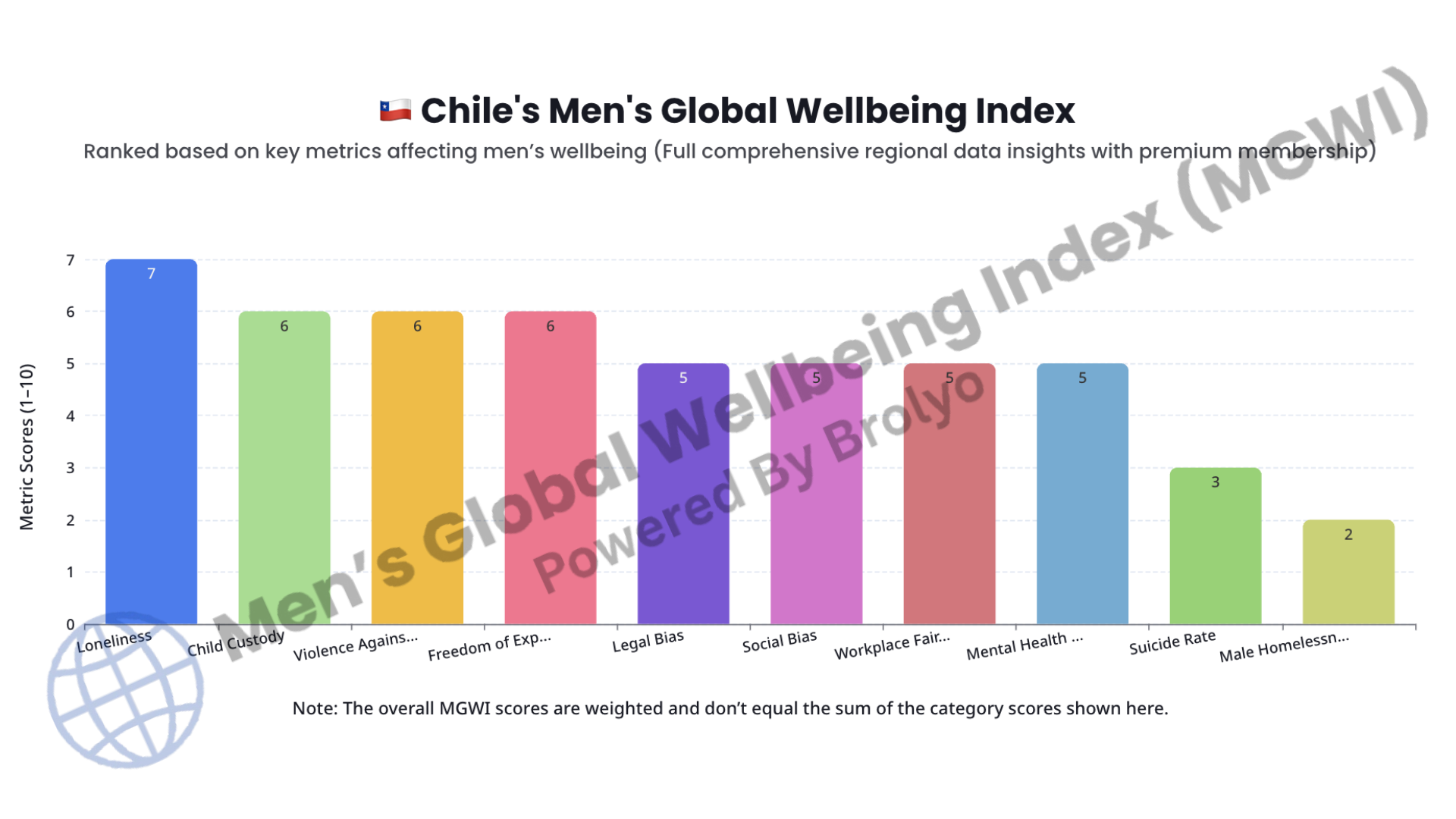
🇨🇱 Chile’s Men’s Global Wellbeing Index in the world and how it’s ranked globally
Chile, known for its dramatic landscapes stretching from the Atacama Desert to Patagonia, is one of South America’s most stable and developed nations. Its culture blends tradition with modernity, and Santiago serves as a hub for politics, business, and social life. But when it comes to men’s wellbeing, Chile presents both opportunities and pressing challenges
The Men’s Global Wellbeing Index (MGWI) evaluates male experiences across ten critical dimensions: suicide, legal bias, homelessness, social bias, child custody, workplace fairness, freedom of expression, mental health access, violence against men, and loneliness. With an overall MGWI score of 50/100, Chile reflects a mixed reality—strength in areas like social freedoms and mental health access, but struggles with child custody, homelessness, and suicide.
Suicide Rate: A Pressing Challenge
Chile scores a 3 on male suicide, highlighting an urgent issue. Male suicide rates remain higher than female rates, and while awareness campaigns exist, stigma continues to prevent many men from seeking help. Factors such as isolation, financial stress, and cultural norms around masculinity amplify the risk. Expanding community programs and targeted interventions for men are crucial in addressing this ongoing challenge.
Legal Bias: Moderate Fairness
With a score of 5, Chile shows moderate fairness in its legal system. While laws strive for equality, men sometimes perceive disadvantages in family courts, especially in custody disputes. Despite a transparent legal framework, navigating these processes can be complex, leaving some men feeling marginalized.
Male Homelessness: A Critical Concern
Chile scores 2 for male homelessness, indicating a serious issue. Rising urban costs, economic inequality, and social instability contribute to high male homelessness rates, particularly in Santiago and other urban centers. Vulnerable groups, such as migrants and men with mental health struggles, face heightened risks. Expanded housing initiatives and support services remain essential.
Social Bias and Workplace Fairness
On social bias, Chile scores 5, while workplace fairness scores 6. Traditional gender expectations still influence male roles in society, but there has been noticeable progress in reducing cultural stigma. In workplaces, men experience relative fairness, though issues of job security, long working hours, and limited representation in caregiving roles persist.
Child Custody: A Significant Struggle
With a score of 2, child custody remains one of the most challenging areas for men in Chile. Despite some legal recognition of shared parenting, mothers are often favored in custody decisions, leaving many fathers feeling sidelined. Reform and greater emphasis on equitable parenting arrangements are urgently needed.
Freedom of Expression: Strong but Complex
Chile scores 6 in freedom of expression, reflecting strong protections of speech, press, and assembly. Men generally feel free to voice opinions, though political polarization and social tensions can lead to self-censorship on sensitive issues. Maintaining open, respectful dialogue remains vital.
Mental Health Access: A Growing Strength
With a score of 5, mental health access in Chile shows gradual improvement. Public health campaigns have increased awareness, but access is still limited in rural regions and demand often exceeds supply. Cultural stigma also prevents many men from seeking therapy, highlighting the need for more male-centered outreach.
Violence Against Men: Underrecognized but Present
Chile scores 6 for violence against men, indicating moderate concern. While less publicized than violence against women, men are frequently affected by street crime, workplace injuries, and occasional domestic violence. These issues often go underreported, limiting awareness and support for male victims.
Loneliness: A Notable Challenge
With a score of 7, loneliness is a growing issue for men in Chile. Urbanization, shifting family structures, and demanding work schedules contribute to disconnection. Older men and those in rural areas are especially vulnerable, underscoring the importance of community and social initiatives to foster connection.
Chile’s MGWI Score in Global Context
At 50/100, Chile sits in the mid-to-lower range of the global wellbeing index for men. Strengths include workplace fairness, freedom of expression, and moderate access to mental health care. However, serious challenges remain in child custody rights, homelessness, and suicide prevention.
Driving Change in Chile
Improving men’s wellbeing in Chile requires a holistic approach: tackling stigma around mental health, ensuring fairer outcomes in family courts, and providing housing and social programs to reduce male homelessness. By combining government policies with grassroots initiatives, Chile can create a more supportive environment for men.
Take Action
Supporting men’s wellbeing in Chile means more than policy—it requires community involvement and cultural change. Men, families, and organizations can work together to reduce stigma, promote fairness, and strengthen social ties. Collective effort is the key to a healthier and more balanced society for men.
📊 Chile MGWI Score: 50/100
Strengths: Workplace fairness, freedom of expression, violence recognition
Challenges: Child custody, homelessness, suicide
💡 If you found this research valuable, consider supporting our work. Even a small donation helps us expand the Men’s Global Wellbeing Index and reach more people. Donate here.