
🇨🇦 Canada’s Men’s Global Wellbeing Index in the world – A Closer Look
Canada consistently ranks among the world’s most livable countries, celebrated for its universal healthcare, social safety nets, and progressive values. Yet, beneath this veneer lies a complex reality for men’s wellbeing that merits closer examination.
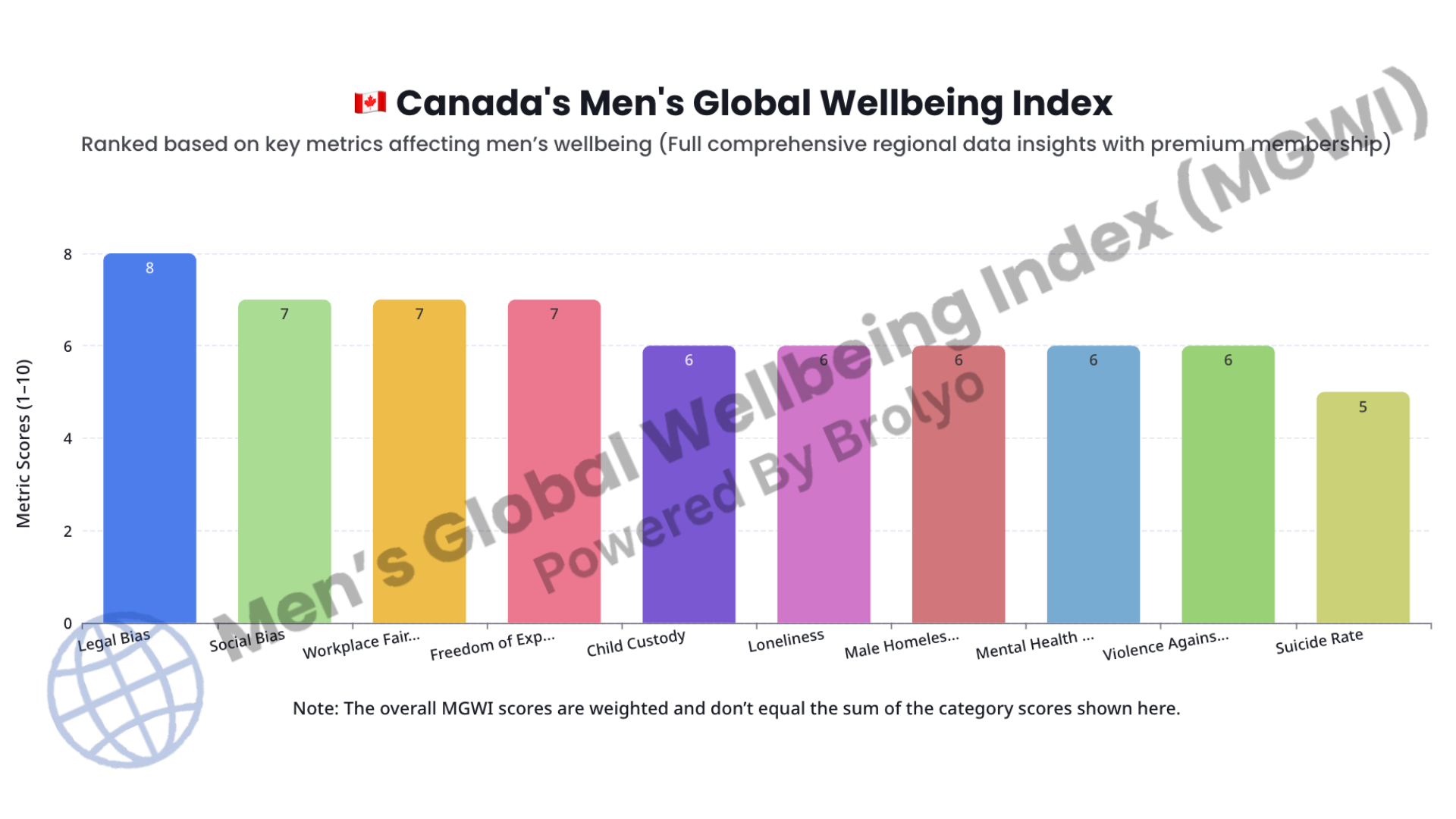
Canada’s Men’s Global Wellbeing Index in the world evaluates ten critical metrics that affect men’s lives, from mental health to legal biases, painting a nuanced picture of how men experience Canadian society.
Suicide Rate: A Silent Crisis
With a score of 5, Canada’s male suicide rate remains a concerning public health challenge. Suicide is one of the leading causes of death among Canadian men aged 15 to 44, highlighting the urgent need for accessible mental health resources and stigma reduction.
Legal Bias: Persistent Inequities
Canada scores an 8 on legal bias, reflecting ongoing challenges in family law and criminal justice systems. Men often face difficulties in child custody battles, and debates continue about the fairness of gender-related legislation. These issues remain a source of stress and inequality.
Male Homelessness: Disproportionate Representation
With a score of 6, male homelessness is a significant issue. Men make up the majority of Canada’s homeless population, often linked to poverty, mental health struggles, and lack of affordable housing. While lower than the highest-scoring nations, it still signals a pressing challenge.
Social Bias and Workplace Fairness
Scores of 7 each indicate that Canadian men continue to face social biases and workplace challenges. Cultural narratives about masculinity, shifting expectations, and certain industry imbalances create stressors that shape men’s daily lives.
Freedom of Expression and Mental Health Access
Canada scores a 7 for freedom of expression, reflecting increasing debates about cancel culture, online speech, and political correctness. Mental health access scores 6, showing that while services exist, they are often not tailored to men’s specific needs or are underutilized due to stigma.
Violence Against Men and Loneliness
Both scoring 6, these metrics highlight ongoing concerns. Violence against men is underreported and often overlooked in public discourse. Loneliness, particularly among older men and younger men in urban centers, remains a growing public health issue.
Canada Compared to Other Nations
Canada’s overall MGWI score of 64/100 places it in the middle tier—better than many countries, but with clear areas of concern. Legal bias, workplace fairness, and social bias stand out as the most pressing challenges.
How MGWI Helps Drive Change in Canada
The MGWI aims to spotlight these issues to mobilize communities, policymakers, and advocates. By presenting transparent data and compelling analysis, MGWI empowers Canadians to push for reforms—whether expanding mental health support, addressing legal inequities, or tackling male homelessness.
Take Action: Support Men’s Wellbeing in Canada
Men’s issues often remain hidden or dismissed. By understanding the data, Canadians can foster a culture of support and awareness. Join the movement by sharing MGWI insights, volunteering for men’s support organizations, or advocating for policy change.
💡 If you found this research valuable, consider supporting our work. Even a small donation helps us expand the Men’s Global Wellbeing Index and reach more people. Donate here.