
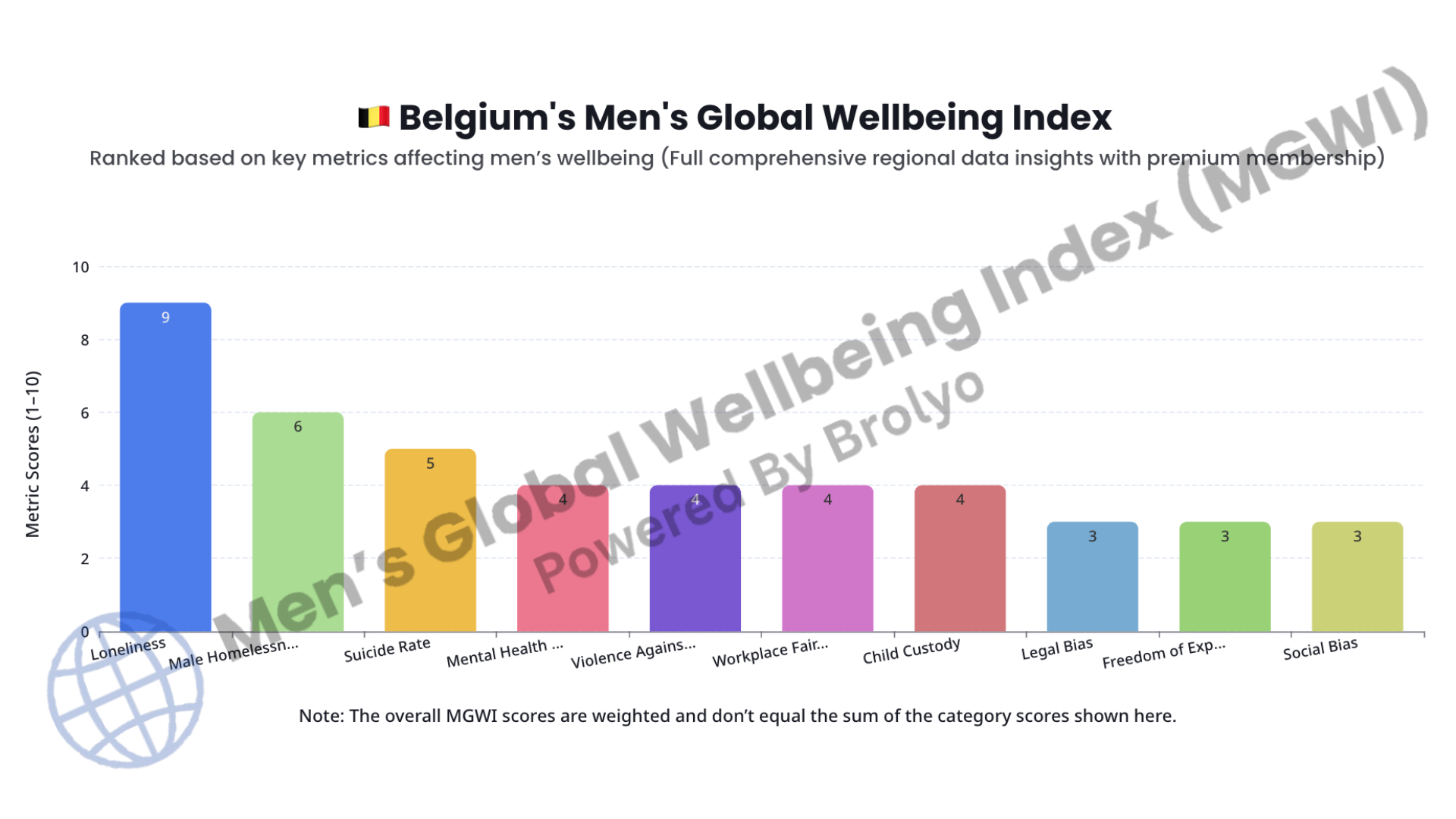
🇧🇪 Belgium’s Men’s Global Wellbeing Index: Balancing Opportunity and Social Challenges
Belgium is known for its rich history, diverse culture, and central role in European politics. From the historic streets of Brussels to the scenic canals of Bruges, Belgium offers men a mix of economic opportunity, social services, and cultural richness. But how does the country fare in terms of men’s wellbeing?
The Men’s Global Wellbeing Index (MGWI) evaluates male experiences across ten critical dimensions: suicide, legal bias, homelessness, social bias, child custody, workplace fairness, freedom of expression, mental health access, violence against men, and loneliness. With an overall MGWI score of 55/100, Belgium demonstrates a moderate level of wellbeing for men—showing strengths in social structures and safety while facing challenges in loneliness, workplace pressures, and mental health access.
Suicide Rate: Moderate Concern
Belgium scores 5 on male suicide, indicating a moderate but ongoing concern. Men remain more vulnerable than women to suicide, with factors such as work-related stress, social pressures, and mental health stigma playing a role. National prevention programs exist, yet cultural and societal norms sometimes discourage men from seeking help when they need it most.
Legal Bias: Fair Protections
Scoring 3, legal bias in Belgium reflects moderate fairness. While the country has progressive laws to ensure equality, some men perceive disadvantages in family law and child custody cases. Courts are generally transparent, but interpretation and procedural nuances can leave fathers feeling sidelined during family-related disputes.
Homelessness: Relatively Low
With a score of 6, Belgium fares relatively well regarding male homelessness. Government support programs and a strong social safety net help reduce street homelessness. Nevertheless, vulnerable populations—including migrants, older men, and those with mental health challenges—remain at risk, highlighting the importance of ongoing social intervention.
Social Bias and Workplace Fairness
Belgium scores 3 in social bias and 4 in workplace fairness. Men may still face cultural stereotypes and societal expectations, particularly regarding traditional masculine roles. In workplaces, policies promoting equality are in place, yet certain industries still exhibit gendered expectations and stress-related pressures that disproportionately affect men.
Child Custody: Balanced but Complex
Scoring 4, child custody in Belgium shows moderate fairness. Shared custody arrangements are becoming more common, but fathers can still experience challenges in negotiating access and ensuring meaningful participation in their children’s lives. Legal reforms continue to improve outcomes, yet disparities persist in practical implementation.
Freedom of Expression: Solid Protections
Belgium scores 4 for freedom of expression, offering men a stable environment for speech, press, and assembly. While generally protected, public scrutiny and societal expectations can sometimes pressure men to self-censor, especially on sensitive topics or in politically charged discussions.
Mental Health Access: Growing Challenge
With a score of 4, mental health access for men in Belgium is a critical area for improvement. Services exist and are generally accessible, yet stigma, cultural expectations, and underutilization mean many men do not receive the care they need. Expanding awareness campaigns and male-focused support initiatives is essential.
Violence Against Men: Lower but Present
Belgium scores 4 in violence against men, reflecting relatively low levels of violent crime. Domestic violence, street crime, and workplace harassment exist but are less prevalent compared to many other countries. Awareness and reporting remain important to ensure men feel supported and protected.
Loneliness: A Persistent Issue
Scoring 9, loneliness is Belgium’s most pressing male wellbeing challenge. Urban lifestyles, shifting family structures, and societal expectations contribute to isolation. Older men and those living alone are particularly vulnerable, emphasizing the need for programs that foster social connection and community engagement.
Belgium’s MGWI in Global Context
With an overall score of 55/100, Belgium ranks in the mid-range internationally for men’s wellbeing. Strengths include homelessness prevention, relative safety, and legal protections. Challenges persist in loneliness, mental health access, and workplace pressures, indicating areas where policy and community efforts can make meaningful impact.
Driving Change in Belgium
Improving men’s wellbeing requires a holistic approach. Efforts should focus on reducing stigma around mental health, encouraging social connectivity, and ensuring fair treatment in workplaces and family courts. Community programs, cultural initiatives, and policy reform can work together to enhance male quality of life across the country.
📊 Belgium MGWI Score: 55/100
Strengths: Homelessness prevention, safety, legal protections
Challenges: Loneliness, mental health access, workplace stress
💡 If you found this research valuable, consider supporting our work. Even a small donation helps us expand the Men’s Global Wellbeing Index and reach more people. Donate here.