
🇬🇧 United Kingdom’s Men’s Global Wellbeing Index in the world and how it’s ranked globally
The United Kingdom is widely known for its rich history, diverse culture, and global influence. From the bustling streets of London to the scenic landscapes of the Scottish Highlands, the UK offers men a mix of opportunity, tradition, and modern lifestyle. But how does the UK fare when it comes to men’s wellbeing?
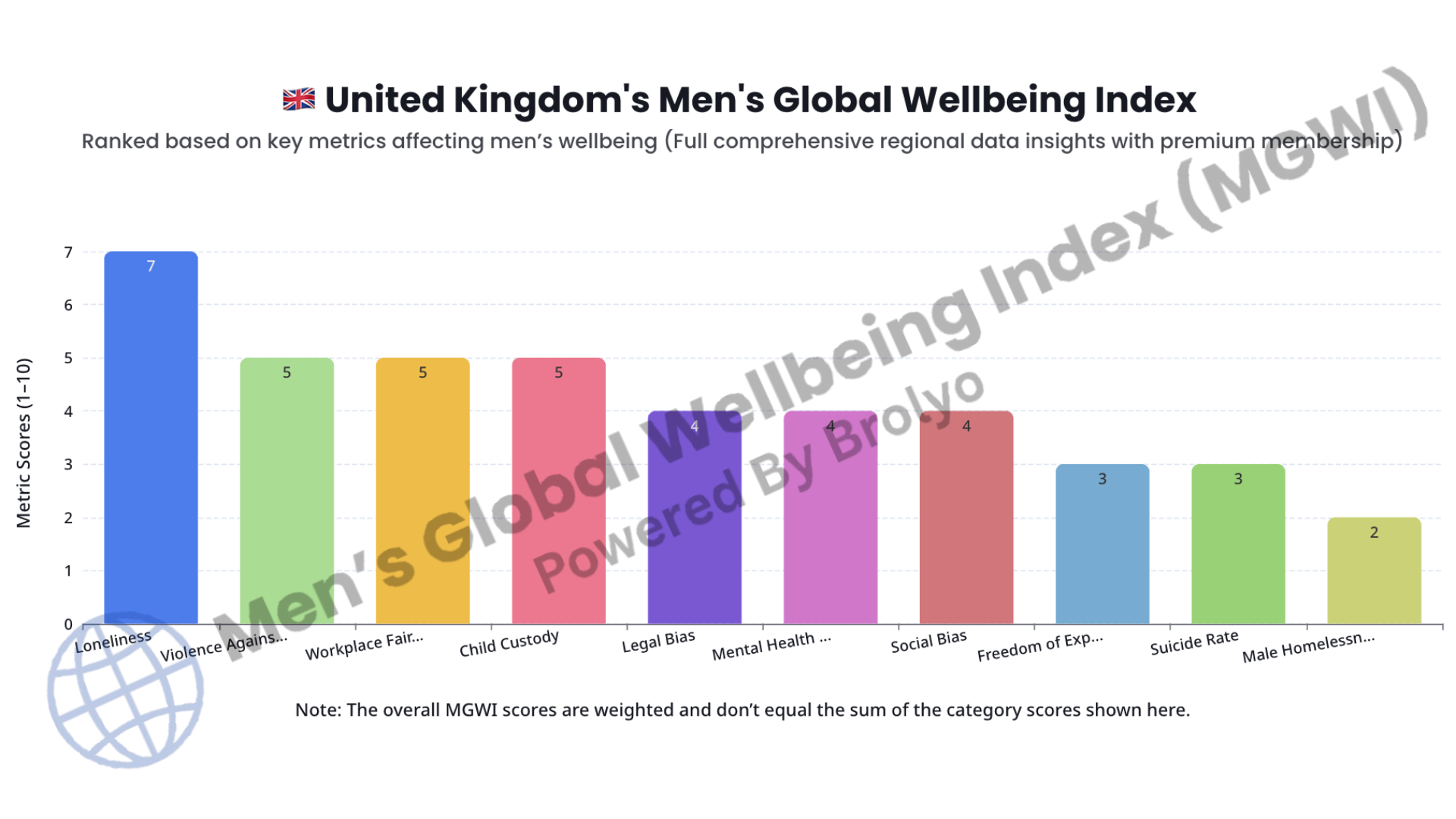
The Men’s Global Wellbeing Index (MGWI) evaluates male experiences across ten critical dimensions: suicide, legal bias, homelessness, social bias, child custody, workplace fairness, freedom of expression, mental health access, violence against men, and loneliness. With an overall MGWI score of 58/100, the UK presents a complex picture—offering strengths in certain areas while highlighting challenges in others, particularly mental health and social pressures.
Suicide Rate: A Persistent Challenge
The UK scores a 3 on male suicide, indicating a serious but somewhat moderated concern. Male suicide rates remain higher than female rates, reflecting a global trend. While national health services provide support and prevention programs, stigma around men seeking help persists. Young men, in particular, face pressures related to employment, social expectations, and mental health awareness, making targeted outreach essential
Legal Bias: Moderate Protections
With a score of 4, the UK demonstrates moderate legal fairness for men. While laws aim to provide equal rights, some men experience perceived disadvantages in areas such as family law and child custody disputes. The legal system is generally transparent, but procedural complexities and subjective interpretations in courts sometimes leave men feeling marginalized in family matters.
Male Homelessness: A Visible Concern
Scoring 2, male homelessness is a significant issue in the UK, particularly in urban centers like London, Manchester, and Birmingham. Socioeconomic disparities, rising housing costs, and unemployment contribute to this problem. Vulnerable men, including veterans, migrants, and those struggling with addiction or mental health challenges, face heightened risk, highlighting the need for continued government and community intervention.
Social Bias and Workplace Fairness
The UK scores 4 for social bias and 5 for workplace fairness, reflecting nuanced realities. Men may encounter cultural expectations and stereotypes that influence social interactions, while evolving gender equality policies in workplaces sometimes create new pressures. Despite strong labor protections, certain industries present challenges, including job insecurity, underrepresentation in caregiving roles, and high-stress environments.
Child Custody: Ongoing Struggles
With a score of 2, child custody in the UK remains a sensitive area for men. Legal reforms promoting shared parenting exist, but practical application can be inconsistent. Fathers often feel disadvantaged during custody arrangements or access negotiations, making this a continuing area of concern despite progressive legislation.
Freedom of Expression: Stable Yet Complex
The UK scores 4, offering men substantial freedom of speech, press, and assembly. While these protections are robust, societal scrutiny, political polarization, and public discourse on sensitive topics can sometimes pressure men to self-censor. Open dialogue and safe spaces remain essential for expressing male perspectives without fear of judgment.
Mental Health Access: Critical Area for Improvement
Scoring 5, mental health access for men in the UK is a growing challenge. Public and private services exist, yet demand often outpaces availability. Men are less likely than women to seek help due to stigma, cultural norms, or lack of awareness. National initiatives have improved awareness, but targeted male mental health programs and accessible therapy remain vital.
Violence Against Men: Underreported Yet Present
With a score of 3, violence against men in the UK is lower than in many countries but still noteworthy. Domestic violence, street crime, and workplace harassment affect men, though incidents are often underreported. Encouraging reporting, support services, and societal acknowledgment of male victimhood is key to improving safety and wellbeing.
Loneliness: A Growing Concern
The UK scores 7 in loneliness, highlighting a significant social challenge. Modern lifestyles, urban isolation, and changing family structures contribute to feelings of disconnection. Middle-aged and older men are particularly at risk, underscoring the importance of community programs, social initiatives, and platforms fostering meaningful male connections.
The UK’s MGWI Score in Global Context
With an overall score of 58/100, the UK ranks mid-range globally for men’s wellbeing. Strengths include certain legal protections and social freedoms, while challenges in mental health access, loneliness, and social bias limit overall male wellbeing. The MGWI reveals the complexity of male experiences in a developed nation, balancing opportunity with persistent pressures.
Driving Change in the UK
Improving men’s wellbeing in the UK requires a multifaceted approach. Addressing mental health stigma, promoting social connectivity, and ensuring equitable treatment in family and workplace contexts are essential. Combining policy reform, community support, and cultural change can enhance male quality of life across the country.
Take Action
Supporting men’s wellbeing in the UK goes beyond statistics. Men, communities, and organizations can work together to foster connection, challenge stereotypes, and normalize seeking help. By actively participating in these efforts, every citizen can contribute to a society where men feel supported, valued, and connected.
📊 United Kingdom MGWI Score: 58/100
Strengths: Child custody, low homelessness, freedom of expression
Challenges: Mental health access, social bias, loneliness
💡 If you found this research valuable, consider supporting our work. Even a small donation helps us expand the Men’s Global Wellbeing Index and reach more people. Donate here.