
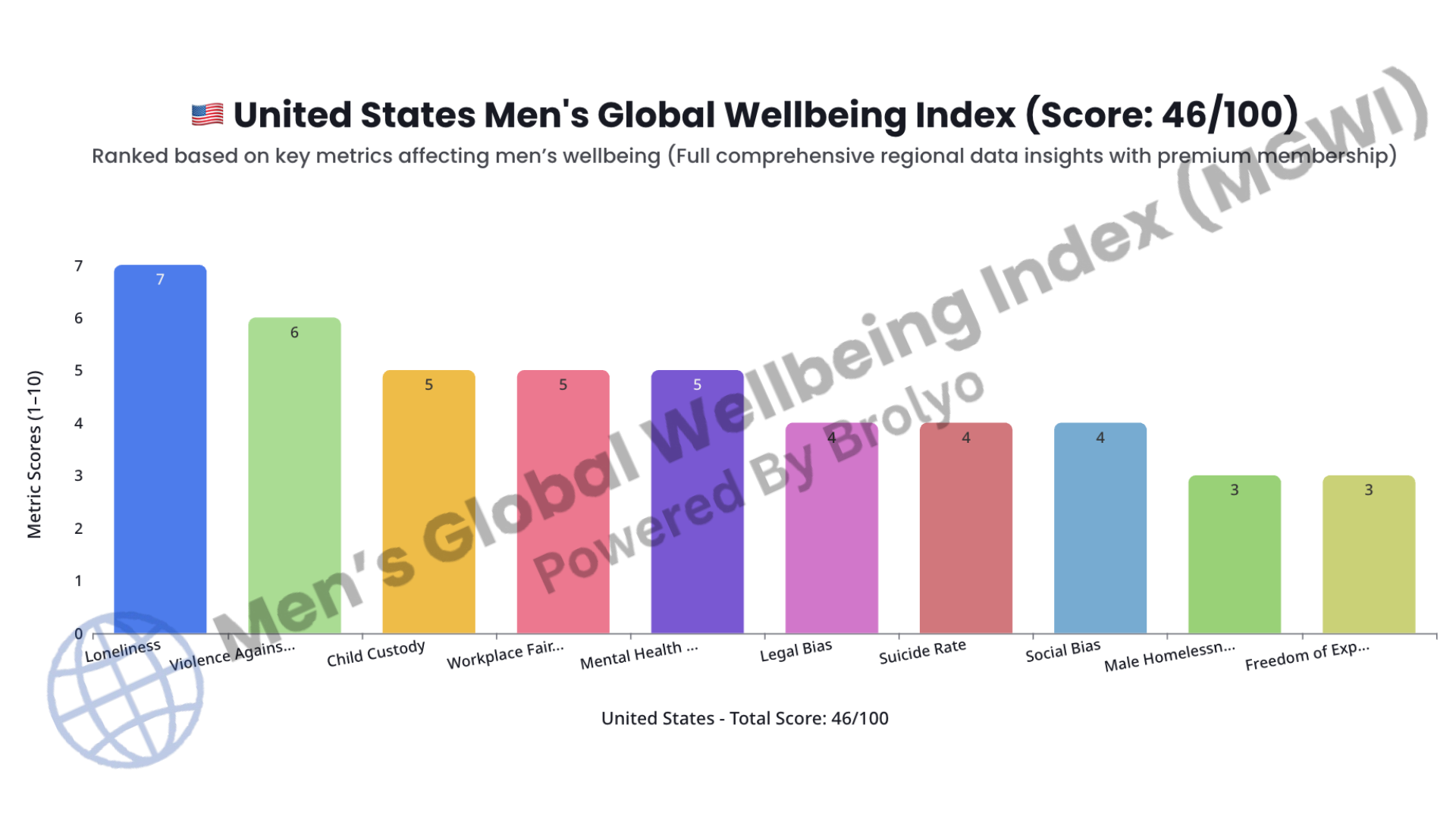
United States Men’s Global Wellbeing Index in the world ranks 46 out of 100 on the Men’s Global Wellbeing Index, reflecting a country where men face serious systemic challenges, despite the appearance of modern equality.
🇺🇸 United States Men’s Global Wellbeing Index in the world and how it’s ranked globally
– Here’s how the U.S. scored across our 10 key categories:
- Suicide Rate: 4/10 — Suicide is the 8th leading cause of death for American men, with particularly high rates among veterans and rural populations.
- Social Bias Against Men: 4/10 — Cultural narratives often portray masculinity as toxic, and male experiences are frequently dismissed.
- Child Custody: 5/10 — Fathers still face systemic disadvantages in family court, particularly around custody and child support.
- Homelessness: 3/10 — Over 70% of the U.S. homeless population is male, with limited male-specific services.
- Legal Bias: 4/10 — Men are often presumed guilty in domestic violence and sexual misconduct cases, with few legal protections.
- Workplace Fairness & Safety: 5/10 — While labor protections exist, men make up the vast majority of workplace injuries and deaths.
- Freedom of Expression: 3/10 — The U.S. has strong legal protections, but cultural and institutional pressures are growing.
- Mental Health Access: 5/10 — Although mental health awareness is increasing, cost, stigma, and gendered assumptions remain major barriers for men.
- Violence Against Men: 6/10 — Male victims of violence are often overlooked, with limited shelters and services.
- Loneliness & Social Connection: 7/10 — Male social isolation is rising, particularly post-pandemic, with few public discussions addressing it.
Key Insights:
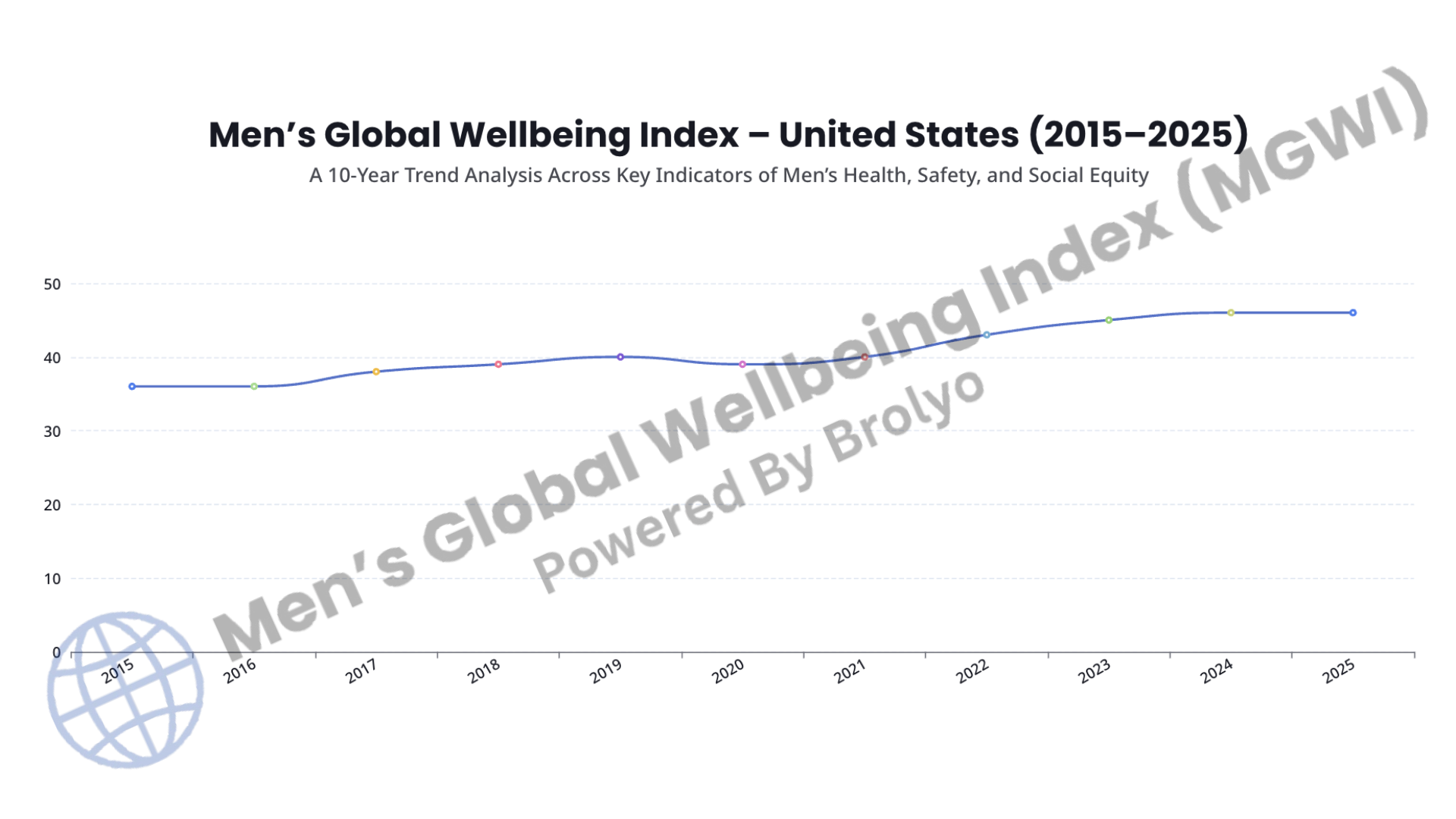
While the U.S. men’s wellbeing score has steadily improved over the past decade, significant blind spots remain in mental health, legal fairness, and housing. Men still face systemic challenges such as punitive assumptions in courts, limited access to tailored public health services, and a lack of emotional support networks.
Despite this progress, persistent gender biases in policy, media, and social care continue to hold back further gains. The U.S. has strong potential for rapid improvement but only through honest acknowledgment and focused action on these issues.
What This Means:
- Advocates: Demand reform in family court systems and push for support infrastructure tailored to men’s real needs.
- Policymakers: Invest in male suicide prevention, men’s shelters, and father-friendly legislation.
- Media: Expand the public narrative to include the nuanced challenges men face today.
The MGWI is not about blaming anyone, it’s about seeing clearly. And it’s time for the United States Men’s Global Wellbeing Index to take men’s wellbeing seriously.
💡 If you found this research valuable, consider supporting our work. Even a small donation helps us expand the Men’s Global Wellbeing Index and reach more people. Donate here.